
Event florist profitability: account for the full project
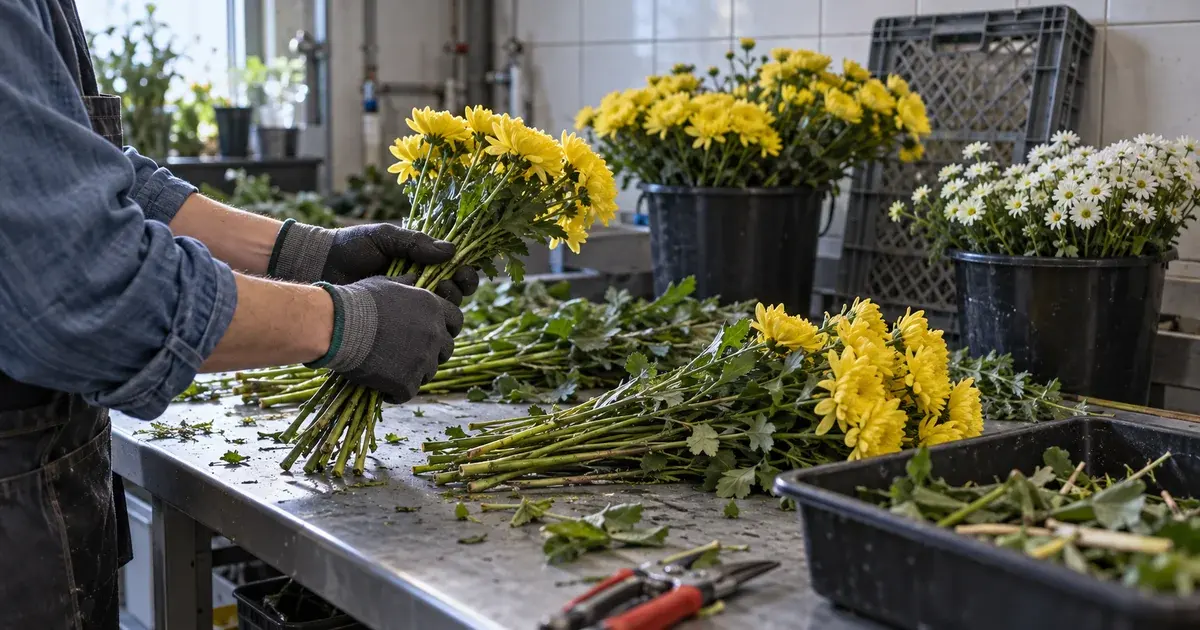
Measure what an event contributes after purchases, labour and logistics, then improve the next project.
5 min read
Published by FlolyaTo improve event florist profitability, measure the complete cost of each project. Flowers matter, but consultation, preparation, installation and equipment return also use time and resources.
A universal markup cannot replace this analysis. Use your costs, remuneration needs and available capacity. The worked example below is hypothetical rather than an industry benchmark.
Revenue, material margin and project result differ
Revenue records sales rather than what remains. A material calculation compares selling prices with flowers and consumables. A complete event analysis also needs labour, transport, rentals and overheads.
Use an internal project result: sales less attributable costs, valued labour and an appropriate overhead allocation. This is a management measure, not automatically accounting profit or personal take-home pay. Treatment of owner remuneration and contributions depends on the business structure.
Review the arrangement pricing method
List costs before setting a project price
- Purchases: flowers, foliage, consumables and required pack sizes.
- Time: design, meetings, ordering, receiving, making and project administration.
- Site work: loading, travel, installation, required waiting, teardown and cleaning.
- Resources: additional staff, vehicles, rentals and other direct expenses.
- Overheads: a consistent share of studio costs, avoiding duplicate allocation.
Count person-hours. Three people installing for four hours use twelve hours of work. Value your own time using a management cost based on remuneration, business costs and realistic available hours. This is not an imposed selling rate.
Allocate shared costs consistently, for example by labour hours or project days. Include design and collection days when judging capacity, not just the client’s event date.
Example: a €3,000 wedding
All figures are hypothetical and exclude tax. Labour covers every attributed hour, including an internal value for the owner’s time. These amounts are not typical prices or recommended targets.
| Item | Planned | Actual |
|---|---|---|
| Sales | €3,000 | €3,000 |
| Flowers and consumables | €900 | €1,050 |
| Total labour | 30 h × €30 = €900 | 40 h × €30 = €1,200 |
| Transport and rentals | €250 | €300 |
| Allocated overheads | €300 | €300 |
| Total analytical cost | €2,350 | €2,850 |
| Internal project result | €650 | €150 |
Extra hours, purchases and logistics consume €500 of the expected result while sales stay the same. The remaining €150 is not take-home pay; it depends on the costs included and precedes any items outside this model.
Choose an improvement from an observed gap
| Problem | Action to test | Measure |
|---|---|---|
| Purchases over budget | Review recipes, pack sizes and ordered quantities | Actual cost and waste |
| Production time underestimated | Time recurring pieces and simplify mechanics | Planned versus actual hours |
| Repeated revisions | Confirm scope and recost changes | Unplanned revision time |
| Missed logistics | Write a schedule with teams and journeys | Site and travel person-hours |
| Too many small projects | Compare contribution with days occupied | Project result and capacity used |
Reliable recipe foundations can still allow different palettes and designs. Test new mechanics and estimate their actual complexity. Do not remove essential flower care or safe installation steps to make an unrealistic price work.
Include the complete delivery plan in your wedding quote
Check profitability across the studio
Positive individual projects do not establish annual profitability if sales cannot cover shared costs. Bpifrance describes break-even sales as the revenue required to cover costs. In a simple model, divide fixed costs by the contribution margin ratio.
Classify costs consistently. If fixed overheads were allocated to individual projects, do not subtract them again when calculating contribution margin. Review the model for your business structure and mix of activities.
Review each event while the details are fresh
- Keep the final quote and record purchases consumed.
- Log hours by task and any extra expenses.
- Compare expected and actual costs on the same basis.
- Explain the two largest gaps and choose one correction.
- Apply the lesson to the next brief, recipe and schedule.
Flolya supports pricing recipes and preparing proposals. To review actual performance, compare estimates with purchase invoices, recorded hours and your accounting. A quote budget still needs real delivery data afterwards.
Frequently asked questions
- Can an event florist be profitable?
- It depends on prices, costs, project volume and working hours. Review individual events and whether the year’s activity covers shared costs.
- What margin should a wedding florist target?
- There is no single appropriate ratio for every studio. Define included costs, remuneration needs and overheads before choosing a target.
- Should I count my own working hours?
- Yes for an economic project analysis. Value them consistently and avoid double counting if already included in remuneration.
- How can I improve profit without adding weddings?
- Correct underestimated purchases and hours, control changes, price a complete scope and prioritise suitable projects. Review actual results afterwards.
Build the budget before committing
Prepare priced recipes and client proposals in Flolya, then compare them with your actual delivery data.
View pricing30-day free trial, no card required.